/123/1/logo.png)
Van Maintenance Guide: Everything You Need to Keep Your Van on the Road
The Complete Van Maintenance Checklist for Tradesmen and Business Owners
If your van is not running, you're not earning. It really is that simple. Yet van maintenance is one of those things that's easy to push to the back of your mind when you're busy juggling jobs and trying to keep customers happy. It's also a part of owning a van that most traders don't account for, which often pushes the cost of van ownership up.
The good news is that keeping your van in good shape doesn't have to be complicated or expensive. Most of it comes down to regular, simple checks that take minutes. If you get into the habit of carrying out simple checks and scheduling your servicing, you'll avoid the bigger bills that come with repairs.
This guide covers everything you need to know about van maintenance, from what to check every morning before you set off, to when to hand it over to the professionals.
Key Takeaways
- Daily and weekly checks take minutes but can prevent breakdowns that cost hundreds
- Tyre condition and pressure are the single most important things you can check yourself
- Ignoring dashboard warning lights is one of the most expensive mistakes van owners make
- A full service history makes your van worth more when it comes time to sell or part-exchange
- Loads of Vans offers servicing for commercial vehicles, keeping your van roadworthy and your business moving
Daily Checks You Can Carry Out in Just Two Minutes
There are some simple checks you can carry out yourself without having to be a mechanic. They take less time than waiting for the kettle to boil, and they could save you a very bad day on the side of a dual carriageway.
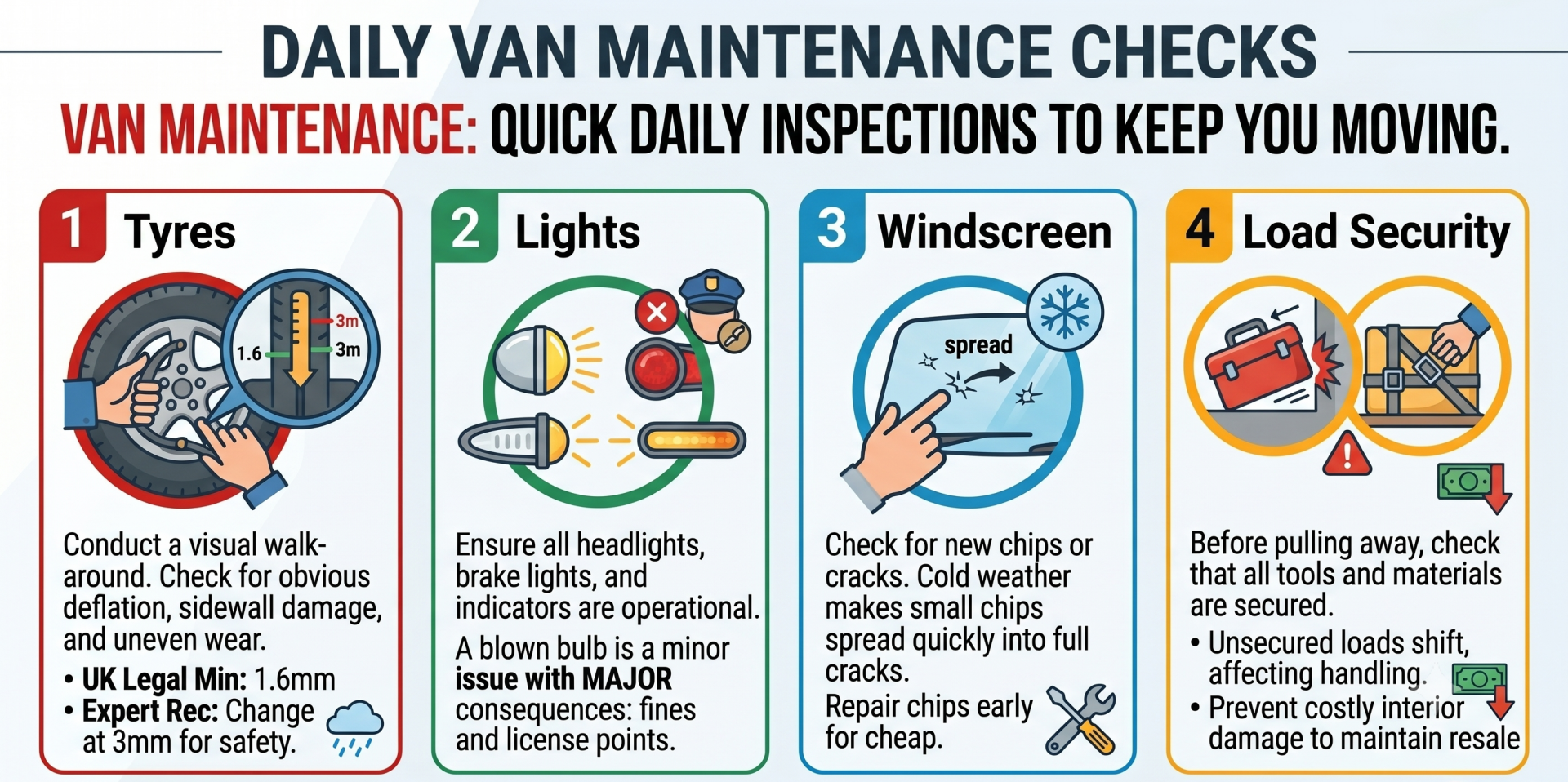
Tyres
Walk around the van and give each tyre a quick look. You're checking for anything obviously flat, any visible damage to the sidewalls, and whether the tread looks even. The legal minimum tread depth in the UK is 1.6mm, but most experts recommend changing tyres at 3mm for safety, especially in wet conditions.
Lights
Check that your headlights, brake lights, and indicators are working. A blown bulb might seem minor, but it can earn you a fine and three points on your licence.
Windscreen
When you look at your windscreen, check for any chips or new cracks. A small chip can quickly spread into a full crack, especially in cold weather. The good news is that most windscreen chips can be repaired cheaply if caught early.
Load security
Before you pull away, make sure your tools and materials are properly secured. Loose loads shift in transit, which affects handling, and an unsecured load that damages your van's interior could cost you more than what you expect, especially if you’re planning on selling the vehicle later down the line.
Weekly Checks to End Your Working Week
Weekly checks only take 10 minutes, and if you carry them out on a Friday, they’re easy to remember, as they can be used as the last task before a well-deserved weekend.
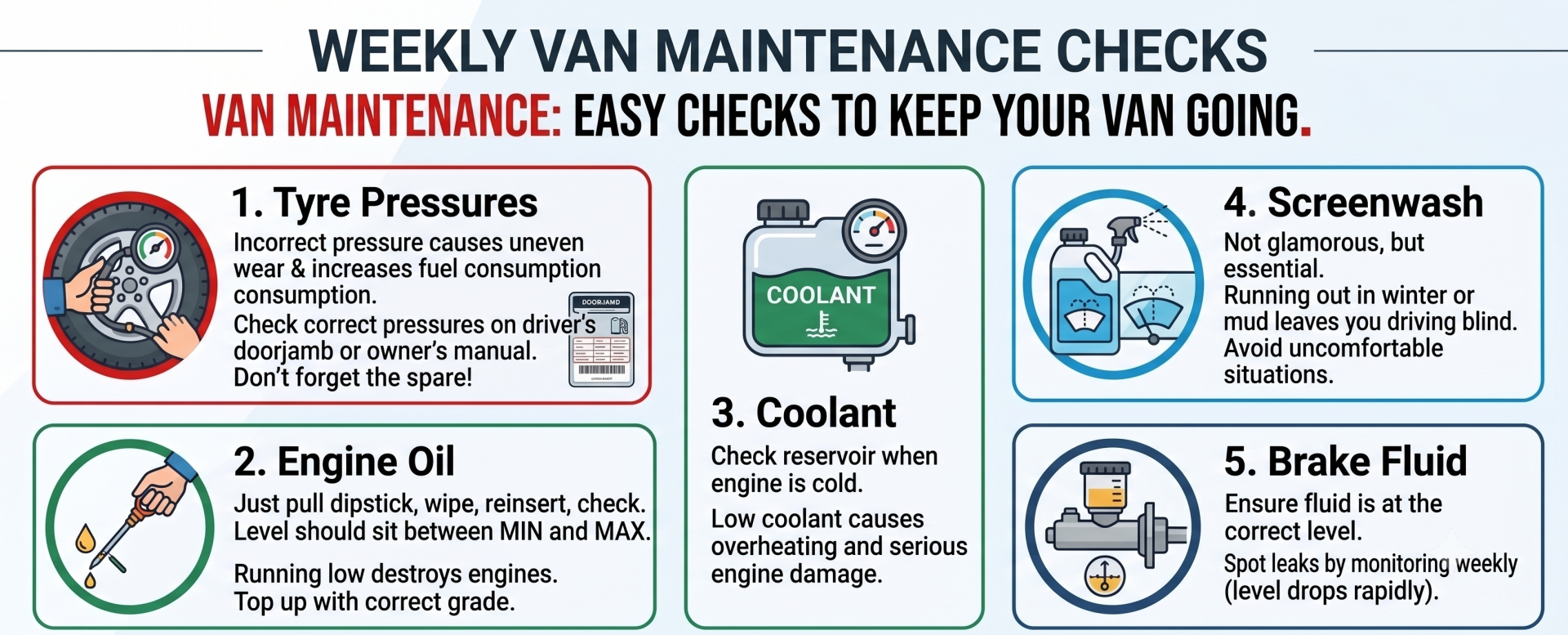
Tyre pressures
Incorrect pressure causes uneven wear and increases fuel consumption, which in the current economic climate is something you probably want to avoid. Check the correct pressures for your van on the driver's doorjamb or in the owner's manual. When you check your tyre pressure, make sure you don’t forget about your spare tyre.
Engine oil
This one is an easy check, just pull the dipstick, wipe it clean, reinsert it, and check the level. Oil should sit between the minimum and maximum markers. If it's low, top it up with the correct grade. Running low on oil is one of the fastest ways to destroy an engine.
Coolant
Check the coolant reservoir when the engine is cold. Low coolant can cause overheating, which can lead to serious engine damage.
Screenwash
Not glamorous, but running out in winter or behind a lorry on a muddy motorway can leave you driving blind in seconds. Making sure it's topped up is the best way to avoid uncomfortable situations.
Brake fluid
You want to make sure your brake fluid is at the correct level. Once you start monitoring weekly, you can easily spot any leaks, as the level will drop rapidly.
Monthly Checks to not Miss Anything
Once a month, take a bit more time to properly look the van over so you don’t miss anything that could lead to a costly repair.
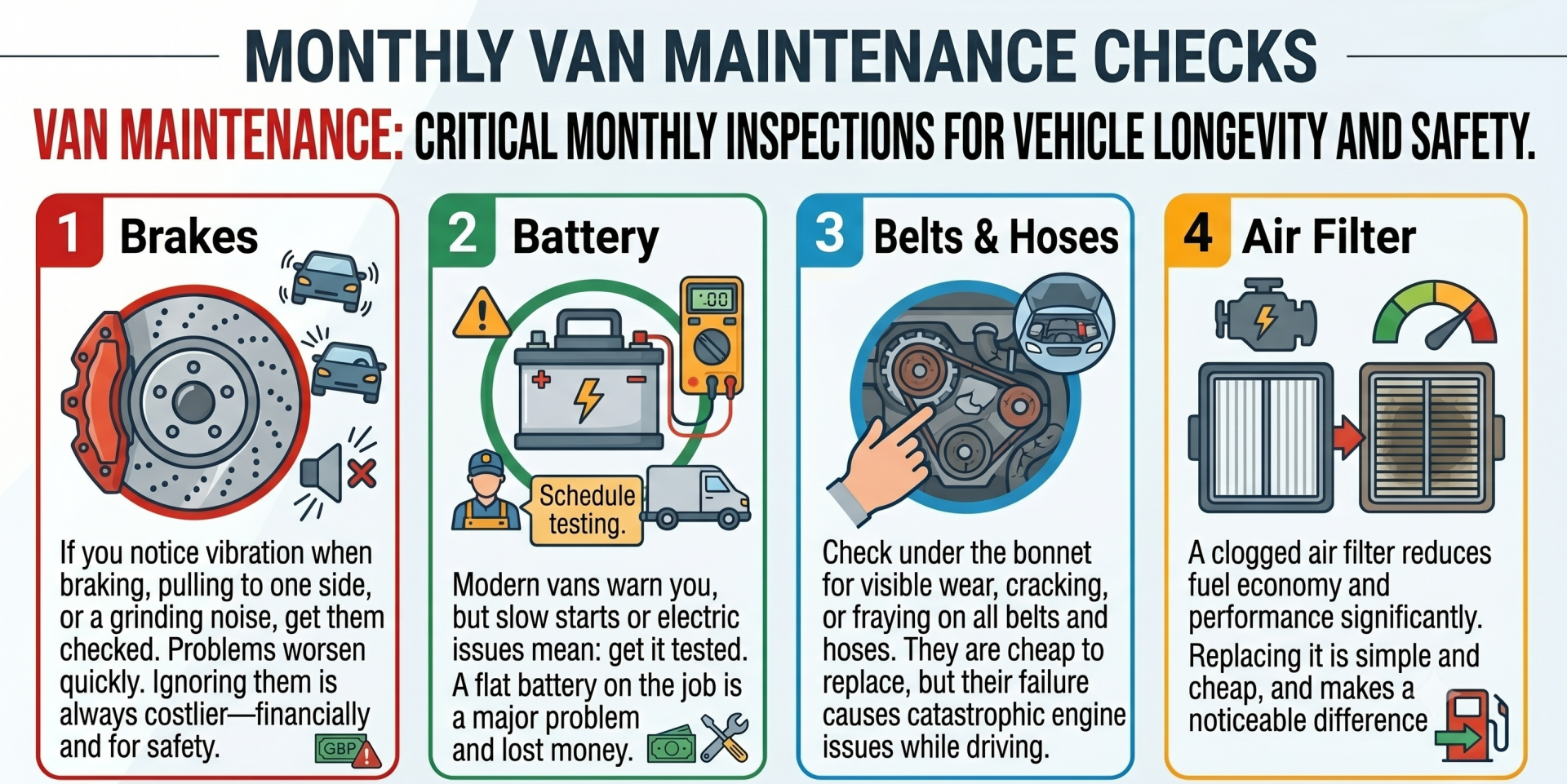
Brakes
If you're noticing vibration when you brake, pulling to one side, or a grinding noise, you likely have a problem with your brakes. Brake issues get worse quickly, and the cost of ignoring them is always higher than dealing with them early, both financially and in terms of safety.
Battery
Modern vans give plenty of warning when a battery is struggling, but if you're noticing slow starts or your electrics are playing up, get the battery tested. You don’t want to end up with a flat battery on the job.
Belts and hoses
Have a look under the bonnet for any visible wear, cracking, or fraying on belts and hoses. These are relatively cheap to replace, but can cause catastrophic failures if they fail while you're driving.
Air filter
A clogged air filter reduces fuel economy and performance. It's one of the simplest and cheapest things to replace, and it makes a noticeable difference.
Annual Servicing and MOT
Your van needs a full service at least once a year, or every 12,000 to 15,000 miles, depending on the manufacturer's recommendation. A service typically covers the engine oil and filter, fuel filter, air filter, spark plugs (on petrol models), brake inspection, and a general health check of all major systems.
Vans over three years old require an annual MOT. It's a legal requirement, but think of it as a useful safety net too. An MOT tester will flag issues you might not have noticed.
If you’re thinking about skipping servicing, think again. Problems that could have been caught early turn into expensive repairs. Warranty claims may be denied if you can't prove the van has been properly maintained. And when you come to sell or trade in, a full service history is worth real money.
Warning Lights: What Not to Ignore
This one trips up a lot of van drivers. A warning light comes on, the van seems fine, so it gets ignored, sometimes for longer than it should be.
The engine management light can mean anything from a loose fuel cap to a serious engine fault. If it comes on, get it scanned as soon as possible. Most garages can read fault codes in minutes, allowing you to quickly address the issue.
The oil pressure warning light means stop the engine immediately. This is not one to drive on. Low oil pressure can cause permanent engine damage within minutes. Any engine damage is very expensive to repair, so don’t ignore this.
The battery light usually means the alternator isn't charging the battery properly. You may have enough charge to get home or to a garage, but it’s not worth testing fate.
Tyre pressure monitoring system (TPMS) warnings are increasingly common on newer vans. If one comes on, you should definitely check your pressures before you continue.
Van Servicing at Loads of Vans
We know your van is your business, which is why we offer professional servicing for commercial vehicles. Whether it's a routine annual service, an MOT, or something that needs diagnosing, our team works with vans every day and understands what they need.
Booking your van in with us means you'll get it back quickly, with a clear explanation of what was done and why.
We want to keep you on the road so you can keep doing business.
Frequently Asked Questions
How often should I service my van?
Most manufacturers recommend a service every 12 months or every 12,000 to 15,000 miles, whichever comes first. Check your owner's manual for the specific interval for your model. If you're covering high mileage, you may need more frequent oil changes in between full services.
What's the most common reason vans break down?
Tyre issues, flat batteries, and running out of fuel or oil account for the majority of roadside breakdowns. All three are entirely preventable with basic regular checks. A few minutes a week genuinely does make a difference.
Do I have to use a main dealer for servicing to keep my warranty valid?
No. Under UK consumer law, you can use any VAT-registered garage without voiding your manufacturer's warranty, as long as the service is carried out to the manufacturer's specification and the correct parts are used. Keep all receipts and records.
How do I know if my tyres need replacing?
The legal minimum tread depth is 1.6mm across the central three-quarters of the tyre. An easy test is the 20p trick: insert a 20p coin into the thread. If the outer band of the coin is visible, your tyres are likely below the legal limit and need replacing immediately.
Can poor maintenance affect the value of my van?
Yes, significantly. A van with a full-service history and documented maintenance is worth noticeably more at part-exchange or private sale than an identical van without records. Beyond resale value, a well-maintained van is more reliable and cheaper to run over its lifetime. It's genuinely worth doing.
While maintenance guidance has been provided, it is for informational purposes only. Any mechanical faults or concerns relating to your van should be referred to a qualified mechanic for professional inspection, diagnosis, and repair.