/123/1/logo.png)
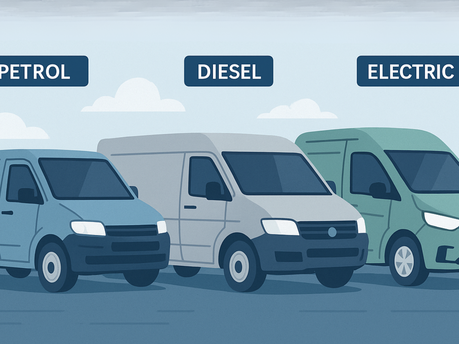
Should I Buy a Petrol, Diesel, or Electric Van? Your 2025 Guide
Making the right fuel choice for your business: honest advice on diesel reliability and electric savings
If you're in the market for a new van, you've probably noticed there's a lot more choice than there used to be. Gone are the days when diesel was your only real option. Now, you're faced with a proper decision: petrol, diesel, or electric? And to be honest, it's not always an easy one to make.
Don't worry, though. We're here to walk you through the pros and cons of each fuel type, help you figure out what suits your business best, and show you why popular models like the Renault Trafic might just tick all your boxes, no matter which direction you're leaning. Read on to find out more…
The UK Van Market: Petrol, Diesel, and Electric Options Explained
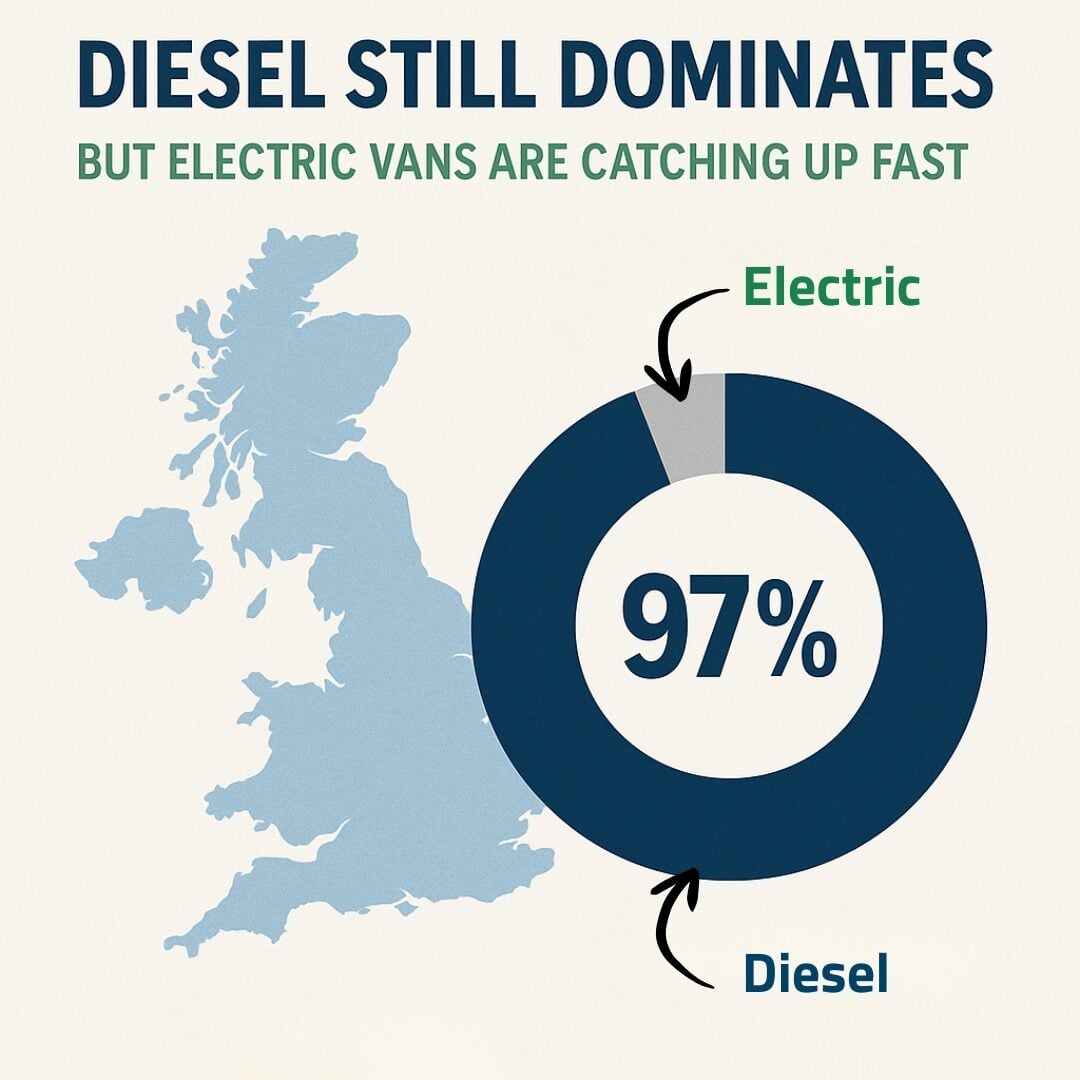
Let's start by setting the scene. Right now, diesel vans still dominate the commercial vehicle world, making up around 97% of all vans on the road in the UK. But that's changing, and fast. Electric vans are becoming genuinely viable alternatives, with better ranges, faster charging, and more affordable pricing than ever before.
Petrol vans? Well, they're the wildcard. They exist, but they're mainly limited to smaller vans like the Ford Transit Courier or the Vauxhall Combo. For most businesses running medium or large vans, the real choice is between diesel and electric.
Let's Talk Diesel Vans: Still the Workhorse Choice of British Businesses
There's a reason diesel has been king of the roads for so long. If you're travelling a lot of miles, towing heavy loads, or working rurally where charging infrastructure is thin on the ground, diesel still makes a lot of sense in 2025 and heading into 2026.
The Advantages of Diesel Vans
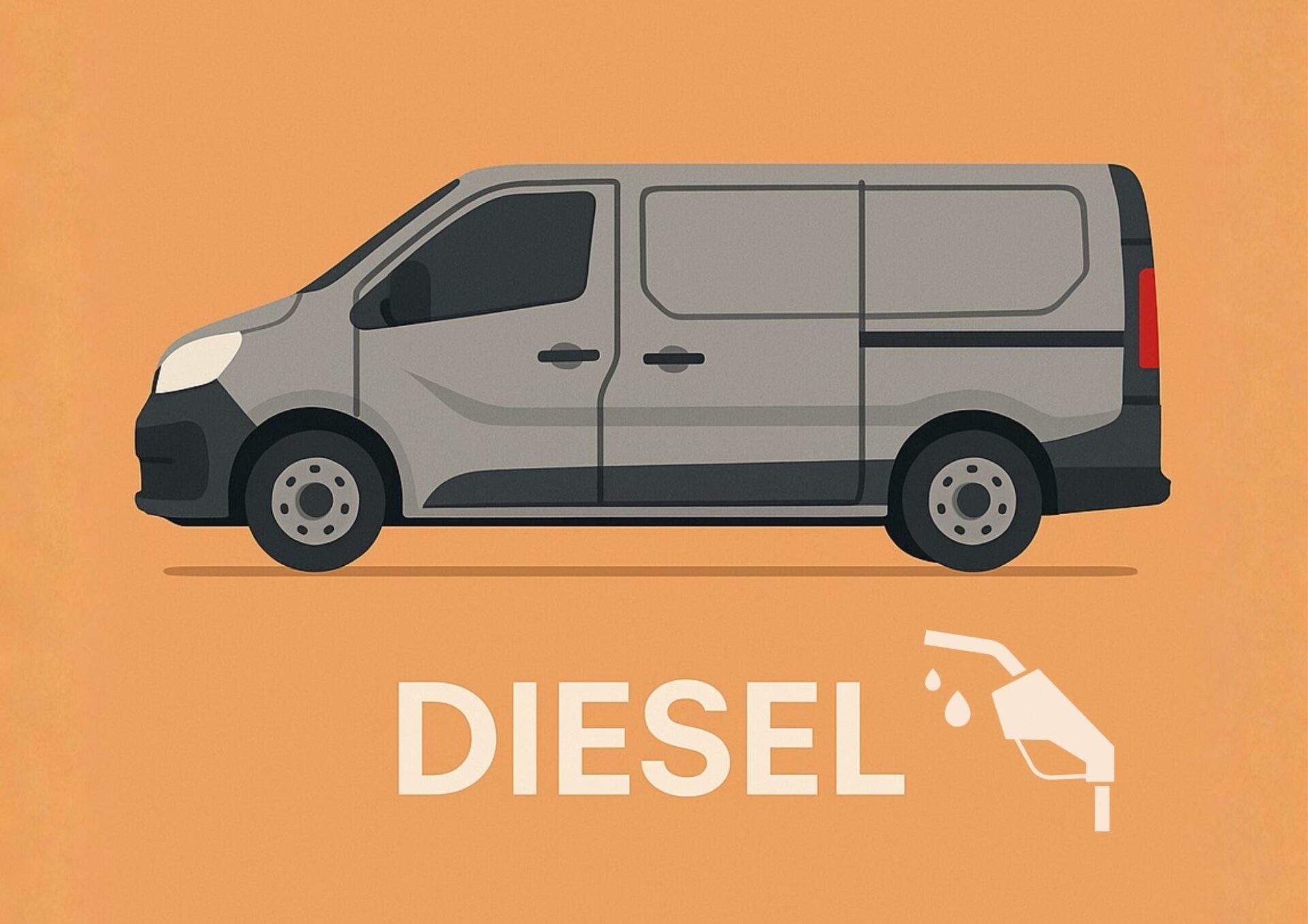
Modern diesel engines like the ones in the Renault Trafic van are refined, powerful, and impressively economical. We're talking distances of 40 to 45 mpg in real-world driving conditions, which is genuinely impressive for a commercial vehicle.
The Renault Trafic, for instance, comes with a range of efficient 2.0-litre Blue dCi diesel engines producing between 110hp and 170hp. That means you can choose the power level to suit your workload, whether you're busy doing deliveries in the city or racking up motorway miles with a full load in tow.
Diesel vans also offer serious towing capacity. For example, the diesel Renault Trafic can tow up to 2,500kg with a braked trailer, which is ideal if you're hauling equipment, trailers, or materials regularly. You won't find yourself hunting for fuel stations either. Diesel can be found everywhere, and you can be fuelled up and back on the road in minutes.
Then there's the payload. Diesel vans like the Trafic offer maximum payload capacities ranging from 957kg up to 1,145kg, depending on configuration. That's proper working van territory.
The Diesel Downsides
It's not all sunshine and roses, mind you. Diesel fuel costs can be considerably higher than electricity, and if you're mainly doing short town-based trips, a diesel van isn't going to perform in its efficiency sweet spot.
Modern diesel vans also come with DPF (Diesel Particulate Filter) systems that can block up if you're only doing short journeys. It's not a deal-breaker, but it's something to consider for sure.
There's also the environmental angle - if that’s something you feel strongly about. While the current Euro 6d diesel engines are cleaner than ever, they're not zero-emission. So, if you're working in cities with Ultra Low Emission Zones (ULEZ) or Clean Air Zones (CAZ), you'll need to make sure your diesel van meets the appropriate emission standards to avoid daily charges. Most new diesels do, but it's worth checking nonetheless.
Electric Vans: The Future Is Already Here, Today
Electric vans have come a long way in recent years. They're no longer experimental vehicles with terrible ranges that won’t get you far. Now, they're serious commercial assets that can genuinely replace a diesel van for many businesses.
Electric Van Advantages
Let's start with the big one: running costs. Charging an electric van costs significantly less than filling up with diesel, especially if you can charge overnight at home or at your business premises when electricity rates are lower. Some drivers are paying as little as 9p per kilowatt-hour on off-peak tariffs. That's a game-changer for your business’s bottom line.
Then there are the tax benefits. Electric vans currently benefit from much lower Benefit-in-Kind tax rates compared to diesel vans. They're also exempt from road tax (VED) in their first year, and then pay just £195 annually from the second year onwards. If you're running multiple vans as a fleet, these savings add up quickly.
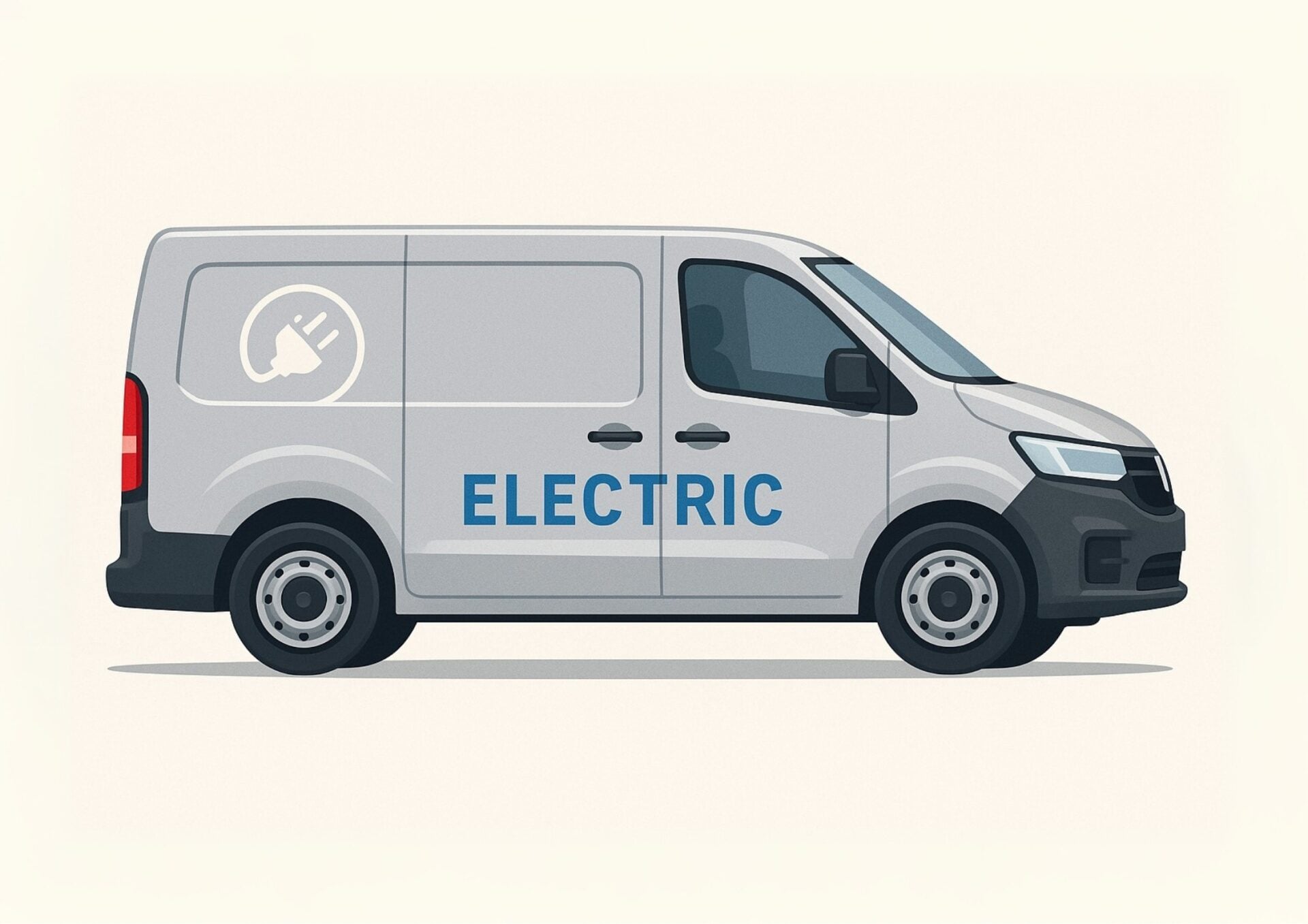
So let’s take a look at an example of a popular-selling electric van in the UK. The Renault Trafic E-Tech 100% electric van offers all the cargo space and practicality of the diesel version with zero tailpipe emissions. You get up to 186 miles of real-world range from its 52kWh battery, which is genuinely usable for urban and suburban delivery work. Plus, there's a £5,000 Plug-in Van Grant available from the government to help with the upfront cost.
Maintenance costs are lower, too. Electric vans have fewer moving parts than diesel engines - no oil changes, no DPF issues, no timing belts to worry about. Studies show that electric vehicles can be up to 29% cheaper to service over the first five years compared to petrol or diesel equivalents.
Electric Van Considerations
Of course, electric vans aren't perfect for everyone, though. The upfront purchase price is higher than diesel equivalents, even with government grants. While running costs are lower, you need to do the sums to see how long it takes to break even based on your annual mileage.
Range anxiety is less of an issue than it used to be, but it's still something to consider. If you're regularly doing over 200-mile days or working in remote areas without charging infrastructure, diesel still makes more sense. The current Renault Trafic E-Tech's 186-mile range is fine for city and town-based work, but not ideal for long-haul deliveries.
However, it’s important to be aware that charging infrastructure is improving rapidly. There are now more electric charging locations across the UK than traditional petrol stations, but you still need to plan ahead. If you can't charge at home or at your business premises, public charging costs can eat into those savings.
If towing is a regular part of your work, then there’s a significant limitation to consider. For example, the electric Trafic also has a reduced towing capacity of 920kg compared to 2,500kg for the diesel version.
What About Petrol Vans?
Here's the honest truth: petrol vans are pretty rare in the commercial vehicle world, and there's a reason for that. They're mainly limited to smaller vans like the Ford Transit Courier, Peugeot Partner, and Volkswagen Caddy.
Petrol engines are cleaner than diesel in terms of CO2 emissions and don't have DPF issues, which makes them better suited to shorter trips. They're also generally quieter and smoother than diesel engines.
But here's the problem: fuel consumption is significantly higher than diesel, especially under load. Petrol vans also tend to have lower residual values, which means they depreciate faster. For most businesses running medium or large vans, petrol just doesn't make economic sense. That's why most van drivers tend to compare diesel versus electric commercial vehicles.
So, Which Fuel Choice Should You Choose?
Right, let's get practical about which van you should choose by summarising the advantages and disadvantages of petrol, diesel and electric vans:
Choose a diesel van if:
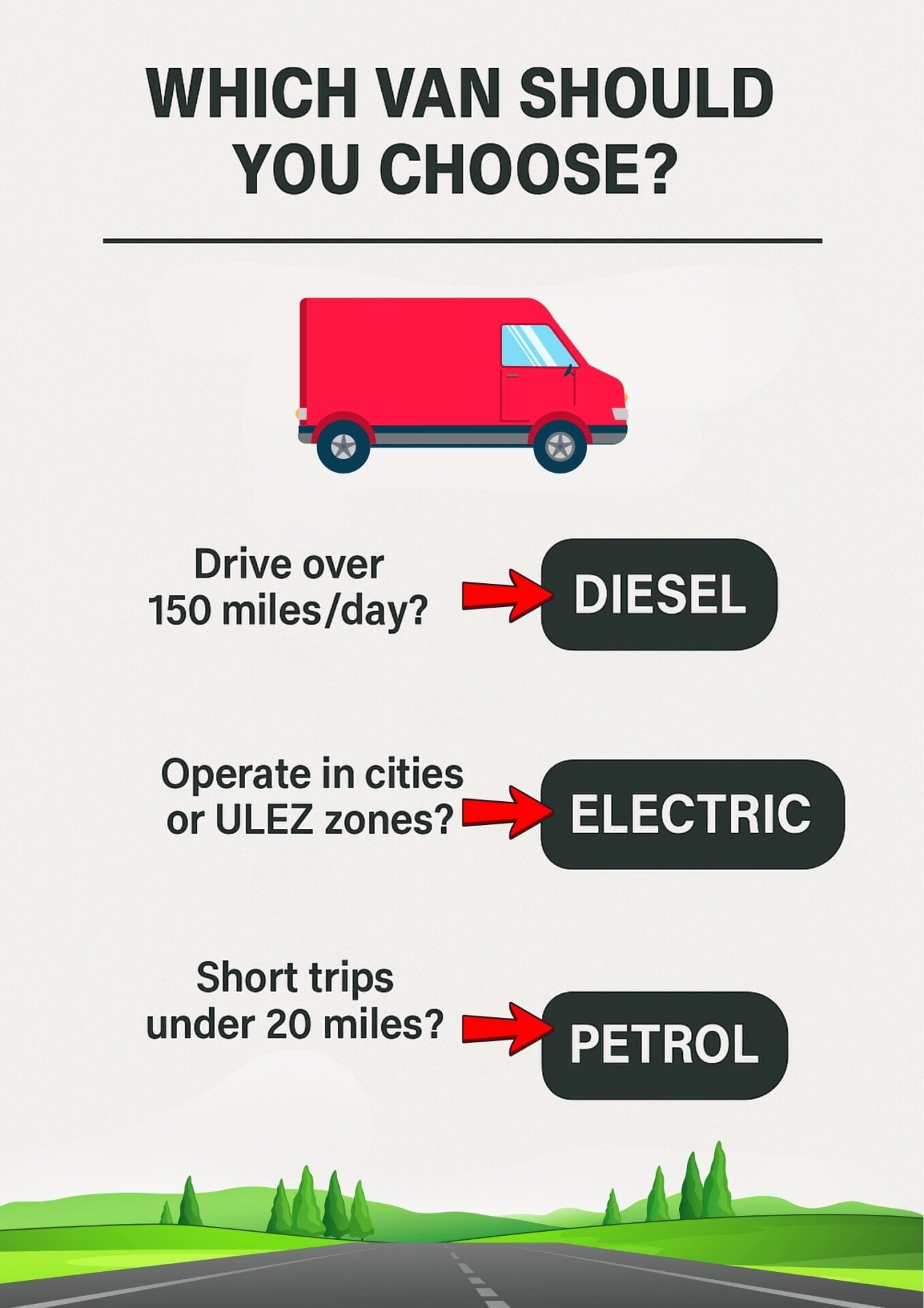
- You're regularly covering over 150 miles per day
- You need to tow heavy loads (over 1,000kg)
- You work in rural areas with limited charging infrastructure
- You need the flexibility to refuel quickly anywhere in the country
- You're not ready for the upfront investment in electric
Choose an electric van if:
- Most of your driving is within a 100-mile radius
- You can charge at home or at your business premises
- You're doing mainly city or town-based
- You want to significantly reduce running costs
- You need to access Low Emission Zones regularly
- You're thinking long-term and want to future-proof your fleet
Choose a petrol van if:
- You're looking at a small van for light-duty work
- You're mainly doing short trips under 20 miles
- Your annual mileage is relatively low (under 10,000 miles)
- You want to avoid DPF issues from stop-start driving
Running Costs of Diesel and Electric Vans: Let's Talk Numbers
This is where things can get interesting in terms of drilling down on a final choice. While diesel vans cost less upfront, electric vans can save you serious money over their lifetime, depending on your usage.
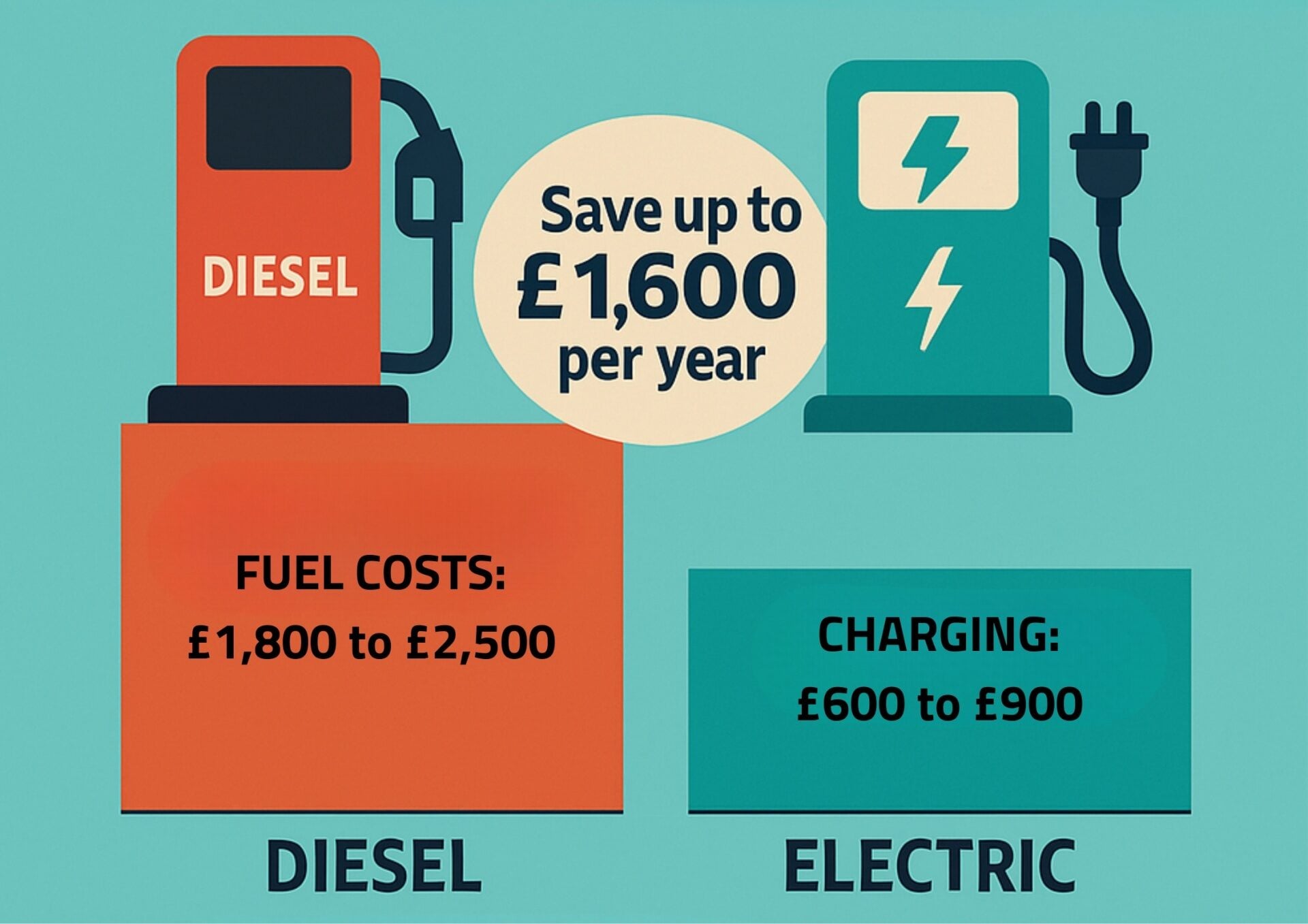
A typical diesel van might cost you around £1,800 to £2,500 per year in fuel for 10,000 miles of driving. An electric van doing the same mileage might cost you just £600 to £900 in electricity, especially if you're charging at off-peak rates. That's a saving of £1,200 to £1,600 per year on fuel alone.
Add in lower servicing costs (electric vans need less maintenance), potential road tax savings, and exemption from congestion charges in cities like London (which currently costs £12.50 per day), and the numbers start to look very compelling for electric.
However, you need to factor in the higher purchase price. An electric van typically costs around £10,000 to £15,000 more than its diesel equivalent, even after government grants. So if you're only doing 10,000 miles per year, it might take between 6 and 8 years to break even. But if you're doing over 25,000 miles annually, you could recoup that investment in as little as 3 to 4 years.
Should You Buy a Petrol, Diesel or Electric Van? Our Conclusion
In reality, there's no one-size-fits-all answer to whether you should buy a petrol, diesel, or electric van. It depends entirely on your specific circumstances, such as your daily mileage, your routes, your budget, and your charging options.
What we can say with confidence is that diesel vans remain brilliant workhorses for high-mileage, heavy-duty applications, while electric vans have matured into genuinely viable alternatives that can save you money and reduce your environmental impact for many types of work.
At the end of the day, your van is your livelihood. Getting this decision right matters, and at Loads of Vans, we’re here to help you do exactly that.
Petrol, Diesel, and Electric Vans For Sale
When it comes to buying your next van, one of the biggest questions you’ll face is what fuel type is right for you - petrol, diesel, or electric? With new technology, changing regulations, and rising fuel costs, it’s not always an easy choice.
At Loads of Vans, we help drivers across the UK find the right van for their business or lifestyle, so that means weighing up what’s best for your mileage, usage, and budget. Let’s break it down so you can make the smartest decision.
Did you know that we stock some of the cheapest Renault Trafic vans in the UK? This very popular mid-size commercial vehicle brilliantly illustrates the choice of proven diesel engines or 100% electric powertrains. Plus, you know you're getting a practical, reliable, and well-designed commercial vehicle that won't let you down.
Whether you’re ready to go electric or sticking with the tried-and-tested diesel vans, our vast selection of vehicles is ready to be explored. We have over 300 vans in stock that are readily available for a test drive with immediate delivery today! Best of all, we are open 7 days a week - so come down and see us.