/123/1/logo.png)
Automatic vs Manual Vans: Which is Best for Your Business?
A Comprehensive Comparison of Transmission Types for Commercial Vehicles
For businesses across the UK, your choice doesn't just affect driving experience. In fact, it can impact running costs, driver productivity, maintenance schedules, and ultimately your bottom line.
Safe to say that more business owners are now considering automatic vans, whether they're buying their first commercial vehicle or upgrading an existing fleet. But is an automatic really better for your business, or does a traditional manual still make more sense?
In this guide comparing automatic vs manual vans for your business, we break down the key differences to help you make a more informed decision…
Key Takeaways
- Driver fatigue is significantly reduced with automatic transmission vans
- No clutch replacement in automatics can save hundreds of pounds over the van's lifetime compared to manual vans
- The fuel efficiency gap has closed, which means modern automatics match or exceed manual efficiency in real-world conditions
- Automatic-only licences are increasingly common among younger drivers, making automatic vans essential for flexible recruitment
- All electric vans are automatic, meaning the future of commercial vehicles is automatic by default
- Automatic vans excel in city-based environments, whereas manual vehicles suit long-distance operations with experienced drivers
Explore Our Automatic & Manual Vans
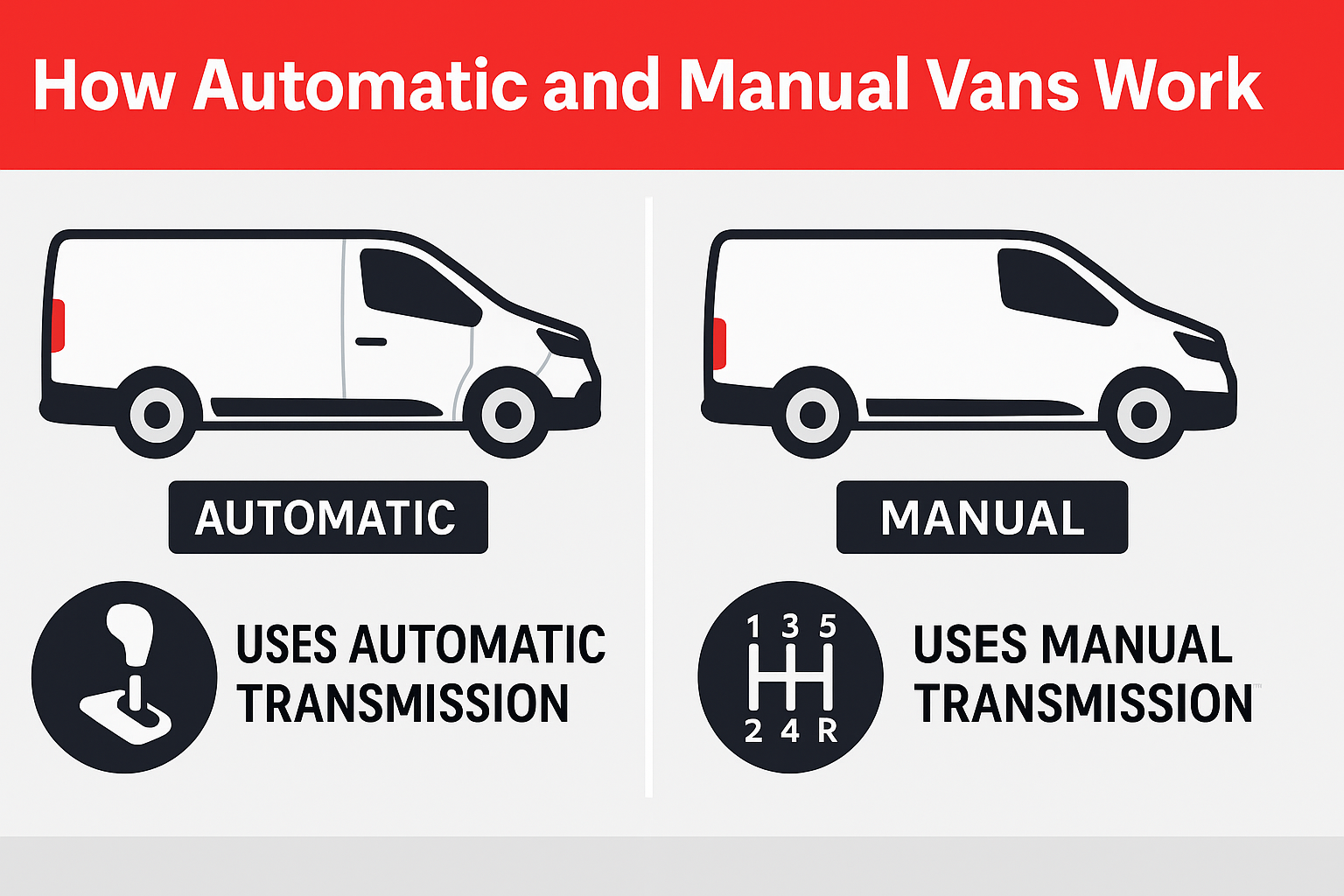
How Automatic and Manual Vans Work
Understanding the fundamental difference between manual and automatic van transmissions is important to help make the right choice:
Manual Van Transmission
A manual gearbox requires the driver to select gears using a gear lever and clutch pedal. The driver is in direct control of when gear changes happen, giving a more engaged driving experience. Manual transmissions have been the default choice for commercial vehicles for decades.
Automatic Transmission
An automatic gearbox selects gears without driver input. You simply select Drive, and the transmission handles everything else. Modern automatics use sophisticated electronics to optimise gear selection for efficiency and performance. There's no clutch pedal - just the brake and accelerator.
What About Electric Van Transmission?
It's worth noting that all electric vans are automatic by nature, as electric motors don't require traditional gearing. This means that as the commercial vehicle market moves towards electrification, the automatic vs manual van debate will become less relevant over time.
Automatic vs Manual Van Guide - The Key Differences
In the table below, we take a look at the key differences between an automatic and a manual van, so you can directly compare the two:
| Consideration | Manual Van | Automatic Van |
| Driving Experience in Heavy Traffic | Manual vans require constant clutch work in stop-start traffic | Without a clutch to operate, driving in heavy traffic is straightforward |
| Comfort on Long Journeys | Motorway driving in a manual van is generally comfortable | Automatics are particularly relaxing on motorways |
| Parking and Manoeuvring | Manual vans require more skill for tight parking situations | Without needing to coordinate clutch and throttle, parking becomes simpler and less stressful |
| Fuel Efficiency | Manual transmissions have traditionally been more fuel-efficient | Some newer automatic vans achieve better fuel economy |
| Maintenance and Running Costs | Manual gearboxes have proven reliability, but they do depend on driver technique | Modern automatic transmissions from reputable manufacturers are highly reliable |
| Payload and Towing | Both manual and automatic vans can handle substantial payloads and towing duties | For towing, many drivers find automatics easier and less stressful |
| Acceleration and Power Delivery | Manual vans give the driver direct control over gear selection | Modern automatics are highly responsive and can deliver smooth, strong acceleration |
| Off-Road and Challenging Conditions | Manuals offer the reassurance of direct gear selection | Automatics can actually be beneficial for precise low-speed control |
| Driver Licensing | If someone passes their test in a manual vehicle, they can also drive an automatic vehicle | If someone passes their test in an automatic vehicle, they cannot legally drive a manual vehicle |
| Business Type Considerations | Ideal for long-distance operations and motorway journeys | Ideal for frequent stopping, parking, and multi-drop delivery services |
| Purchase Price | Manual vans typically cost less than equivalent manual versions | While the upfront cost is higher, remember to factor in the savings on maintenance and productivity |
| Environmental Considerations | Modern automatic and manual vans produce similar CO2 emissions | Some automatics are actually more efficient than manuals |
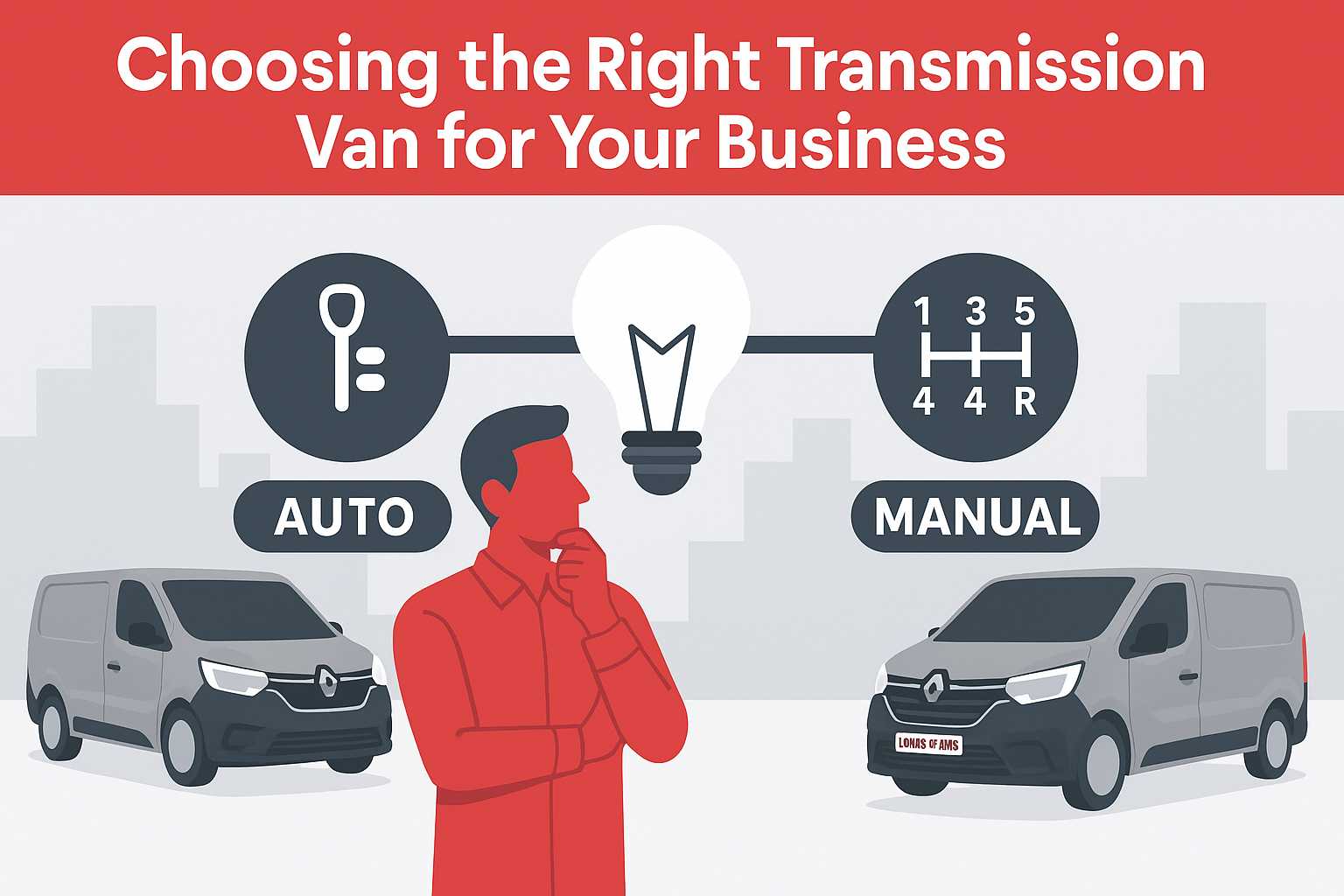
Choosing the Right Transmission Van for Your Business
So, which van transmission type is best for your business? The answer depends on your specific circumstances, which we’ve summarised below:
Choose a Manual Van If:
- Your drivers are experienced with manual vehicles and prefer them
- You mainly cover long-distance motorway work
- Upfront cost is your primary concern
- Your drivers all hold manual licences
- You value direct control and driver engagement
Choose an Automatic Van If:
- You operate primarily in towns and cities with heavy traffic
- The van is primarily used for multi-drop delivery services
- You want to reduce driver fatigue and improve comfort
- You employ or plan to employ drivers who only hold automatic licences
- You're considering electric vans (which are all automatic)
- Driver retention and job satisfaction are priorities
- You want to eliminate clutch replacement costs
Test Drive Both Manual & Automatic Van Options
The best way to make your decision is to drive both manual and automatic vans in conditions similar to your typical working day. When you book a test drive, try parking and manoeuvring, drive in traffic, and get a feel for how each transmission type suits your needs.
If you operate a fleet, then consider gathering feedback from your current drivers about their preferences and pain points. Their day-to-day experience is invaluable insight into your business needs.
You can also take a look at our in-depth videos of the latest automatic vans, including the large-sized All-New Renault Master 2025:
Automatic & Manual Vans for Sale at Loads of Vans
Here at Loads of Vans in Surrey and South London, we stock both manual and automatic vans across all sizes and makes. Our experienced team can help you weigh up the options based on your specific business needs and budget.
We understand that there's no one-size-fits-all answer to the manual vs automatic question. What matters is finding the right van that will reliably serve your business, keep your drivers comfortable and productive, and provide good value over its working life.
Browse our current stock online or get in touch to discuss your requirements. Whether you decide on manual or automatic, we'll help you find a quality used van that's right for your business, at the best price possible.